
Your content team is burning hours on tasks a machine should handle. Many platforms lock bulk generation behind high tiers or cap credits mid-project, which is why agencies start hunting for alternatives. The wrong pick means missed deadlines and shrinking margins on every retainer.
This article breaks down eight Distribb alternatives, covering the features that matter most for client work: bulk generation, SEO modes, and integrations. You will also see how pricing and credits scale across teams, plus a clear criteria list and our top overall pick to help you decide.
What to Look For in Distribb Alternatives for Agencies and Content Teams
When evaluating Distribb alternatives, agencies and content teams must prioritize features that streamline multi-client workflows, automate publishing, and provide robust analytics to prove ROI. The wrong tool adds overhead. The right one removes repetitive tasks so your team can focus on strategy and client relationships.
Start by mapping your actual workflow. Do you publish to a handful of blogs, or do you manage social calendars across a dozen client accounts? That answer shapes everything from multi-channel publishing to how much team collaboration you need built in.
Four criteria matter most for agency use:
- Multi-channel publishing: Support for blogs, social networks, newsletters, and RSS in one place
- Team collaboration: User roles, permissions, approval workflows, and shared content calendars
- White-label options: Client-facing reports and dashboards that carry your agency brand
- Scalability: Pricing and infrastructure that grow with your client roster without forcing constant plan changes
White-labeling deserves special attention. When clients see your logo on reports and dashboards, the tool becomes part of your service rather than a third-party vendor they never asked about. That distinction affects retention as much as it affects perception.
Analytics close the loop. Clients renew when they can see consistent output, engagement trends, and publishing cadence in a report they understand. A tool that tracks performance across channels saves your team hours of manual spreadsheet work each month.
The sections below break down the two areas where alternatives differ most: core features and pricing structure. Use them as a checklist when comparing options against your own client mix.
Key Features: Bulk Generation, SEO Modes, and Integrations
A Distribb alternative should excel at bulk content generation, offer advanced SEO modes for keyword optimization, and integrate seamlessly with major platforms like WordPress, social networks, and email marketing tools. For agencies, these three capabilities determine how much manual work disappears from the weekly schedule.
Bulk generation is the first filter. Producing one article at a time does not scale when you manage content for multiple clients. Look for tools that can generate dozens or even 100+ articles in a single batch, then let you review and schedule them together. This turns a week of drafting into an afternoon of editing.
SEO modes separate basic writers from serious publishing tools. A strong implementation analyzes SERP competitors for your target query, suggests LSI keywords to broaden topical coverage, and structures headings and metadata for search. For agencies, this means junior team members can produce optimized drafts without a senior strategist reviewing every paragraph.
Integrations decide how much of your stack you can consolidate. A capable alternative typically connects with:
- Social networks: Facebook, Instagram, Twitter, LinkedIn, Pinterest, TikTok, and YouTube
- Blogging platforms: WordPress and similar CMS options
- Distribution channels: RSS feeds and email marketing services for newsletters
Support for 30 or more platforms is a reasonable benchmark for an agency-grade tool. The practical benefit is a single content calendar feeding every client channel, which reduces context switching and the risk of missed posts.
Media and asset management round out the feature set. A shared media library keeps images, logos, and brand assets consistent across client accounts, while a content library lets your team repurpose approved pieces instead of starting from scratch. Combined with user roles and permissions, these features keep brand consistency intact even when several team members touch the same account.
Pricing, Credits, and Scaling for Client Work
Pricing models for Distribb alternatives vary widely, but agencies should look for credit-based systems that allow rollover and scale affordably as client demands grow. The structure matters more than the sticker price, because client volume rarely stays flat.
Most tools in this category fall into one of two models. Subscription plans bundle a fixed set of features and usage limits, while credit systems meter output and let you buy more as needed. For agencies, credits usually offer better alignment between cost and client billings.
Three pricing details deserve scrutiny before you commit:
- Credit rollover: Unused credits should carry into the next billing cycle, since client work is seasonal
- Volume discounts: Higher tiers should lower your effective cost per article or post as usage grows
- Plan flexibility: You should be able to add capacity mid-cycle without jumping to an enterprise tier
Monthly versus annual billing is the next decision. Monthly plans suit agencies still testing a tool or onboarding new clients, while annual commitments typically reduce the effective rate for teams with predictable volume. Match the term to your client contracts rather than the discount alone.
Typical entry tiers for this category sit at a low monthly cost with modest credit allowances, aimed at solo operators. Mid tiers support several client accounts with higher limits and collaboration features. Upper tiers add white-label reporting, more seats, and priority processing for teams running high-volume campaigns.
Watch for hidden scaling costs. Per-seat charges, add-on fees for extra integrations, and overage rates can quietly inflate the bill once you pass a handful of clients. Ask how pricing behaves at double your current volume before signing, and confirm that upgrading does not reset your accumulated credits.
The right structure lets you take on a new client without renegotiating your tooling. If adding one account forces a plan change or a pricing conversation, the model is working against your growth rather than with it.
1. Autoblogging.ai - Best Overall
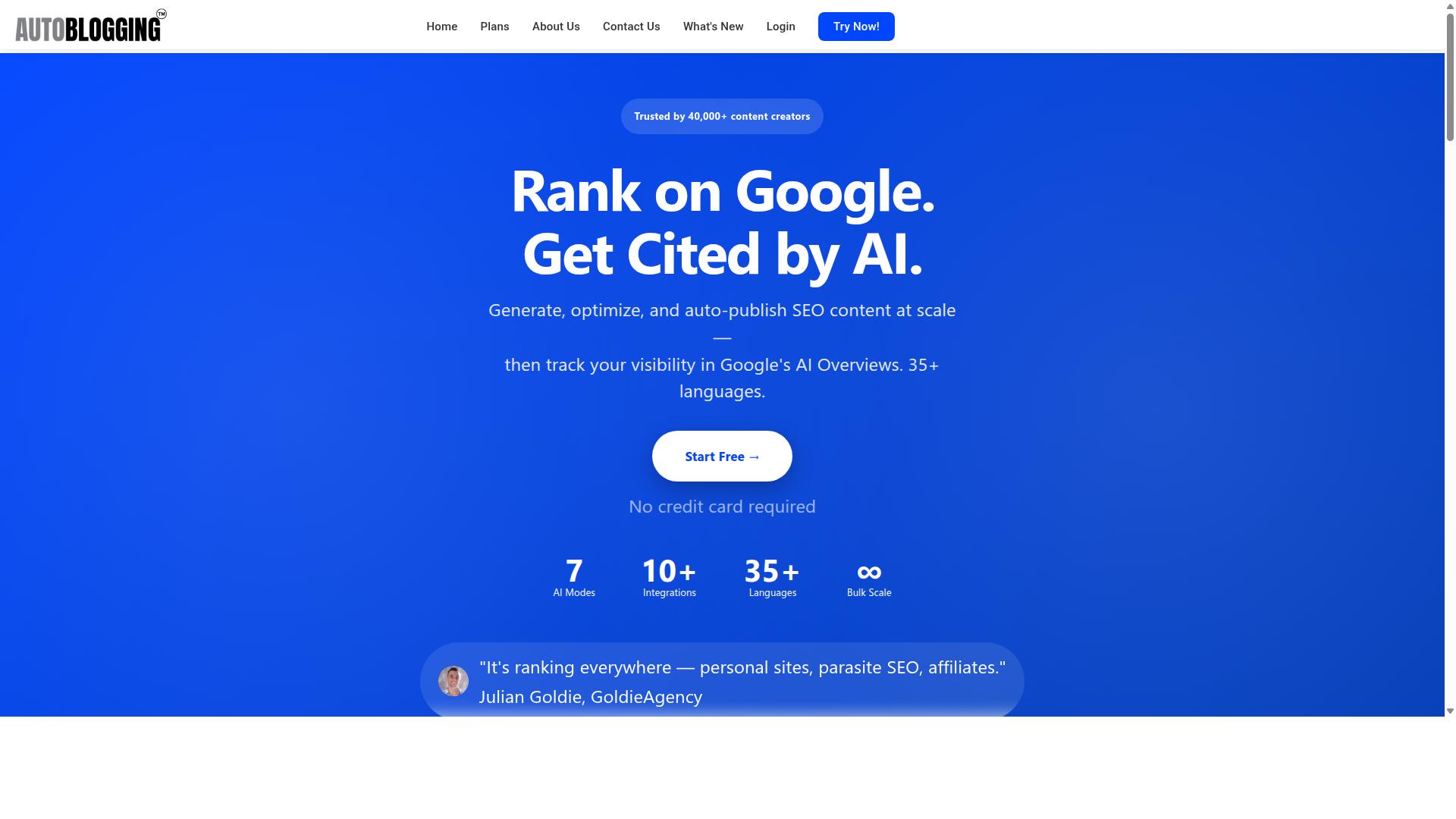
Autoblogging.ai stands out as the best overall Distribb alternative for agencies and content teams, thanks to its powerful AI modes, extensive integrations, and agency-friendly features. It has been trusted by more than 40,000 creators and has generated over 1 million articles, earning a 4.9 rating along the way.
For agencies juggling multiple clients, the platform's bulk generation and multi-language support remove much of the manual grind that slows down production. It also connects with the publishing tools teams already use, which keeps content distribution and workflow management in one place.
That combination of volume, language coverage, and integration depth is why it leads this list. The details below explain how its modes, pricing, and agency features compare with the rest of the alternatives covered here.
Modes, Pricing, and Agency-Friendly Features
Autoblogging.ai offers multiple AI modes including Quick Mode and Godlike Mode, a credit-based pricing structure starting at $19 per month, and features designed for agencies such as bulk generation and Done For You packages. Each mode targets a different level of depth, so teams can match output to the job at hand.
- Quick Mode - free to use, available in single and wizard formats for fast drafts
- Godlike Mode - adds SERP competitor analysis, LSI keywords, and knowledge graph extraction
- Bulk Generation - produces up to 500 articles through a CSV upload
- News Mode - pulls from Google News integration
- Amazon Reviews Mode - built for review-style content
Pricing runs on credits, with monthly plans from Starter at $19 for 40 credits up to Enterprise at $999 for 5,000 credits. Annual billing lowers the effective rate, with Starter at $12 per month ($148 per year) and Enterprise at $649 per month ($7,792 per year). Credits roll over on every plan, and new accounts get 10 free credits per month with no credit card required.
For content teams, the publishing layer matters as much as generation. Autoblogging.ai supports WordPress integration across unlimited sites with one-click publishing, a plugin, and scheduled auto-posting. It also reaches Web 2.0 platforms like Medium, Dev.to, Hashnode, Telegraph, and Tumblr, plus Shopify, Wix, Webflow, Blogger, and Ghost, along with API, Zapier, and n8n connections.
Beyond publishing, the platform includes a Site Optimizer, a 21-point Semantic SEO Analysis audit, a Snippet Optimizer, Topical Maps, Intense Optimizer, Fan Out Queries, AI Infographics, Outreach Prospects, and both AI and Human Proofreader tools. A Content Repurposer helps teams stretch one piece across channels, while Done For You packages cover fully managed production. Payments are accepted via Visa, MasterCard, American Express, and PayPal, with bank transfers available for annual enterprise plans through Stripe, and accounts can be canceled at any time.
2. Koala AI

Koala AI is a popular choice for content generation, known for its user-friendly interface and SEO-focused features, but it may lack some advanced agency tools. It bundles two main pieces: Koala Writer, an SEO-oriented AI writer, and Koala Chat, a chatbot companion. For solo publishers and small SEO teams, that pairing covers a lot of ground without much of a learning curve.
The biggest draw is speed. Koala Writer produces publish-ready, SEO-optimized articles in one click, which appeals to niche site owners who need volume without a heavy editing cycle. It also supports custom outlines and tone-of-voice options, so writers can shape output before it lands in a draft folder.
Affiliate marketers get a specific win here. The tool handles Amazon affiliate articles, a format that many general-purpose writers handle poorly. A Google Sheets integration adds a light automation layer, letting teams queue topics and pull results into a familiar spreadsheet workflow.
Where it falls short is depth for larger operations. The interface is basic, and the chatbot feels basic compared to the writer. Agencies juggling multiple clients, approval chains, and multi-channel publishing may find the bulk generation and integration options thinner than they need.
- Strengths: one-click article generation, SEO optimization, Amazon affiliate support, custom outlines, tone-of-voice control, Google Sheets integration
- Best for: SEOs, niche site publishers, and small content teams focused on blogging output
- Limitations: limited bulk generation, fewer integrations, basic interface, chatbot trails the writer in capability
Pricing is positioned as accessible. Public materials describe it as starting at a low entry point, with a free word allowance to test the writer before committing. Rates and allowances can change, so check current terms directly.
For agencies weighing Distribb alternatives, Koala AI fits a specific slot: a lean article engine rather than a full content operations platform. Teams that mainly need SEO blog drafts will get value quickly. Teams that need scheduling, client management, user roles, and multi-channel distribution should treat it as one piece of a wider stack.
3. Agility Writer
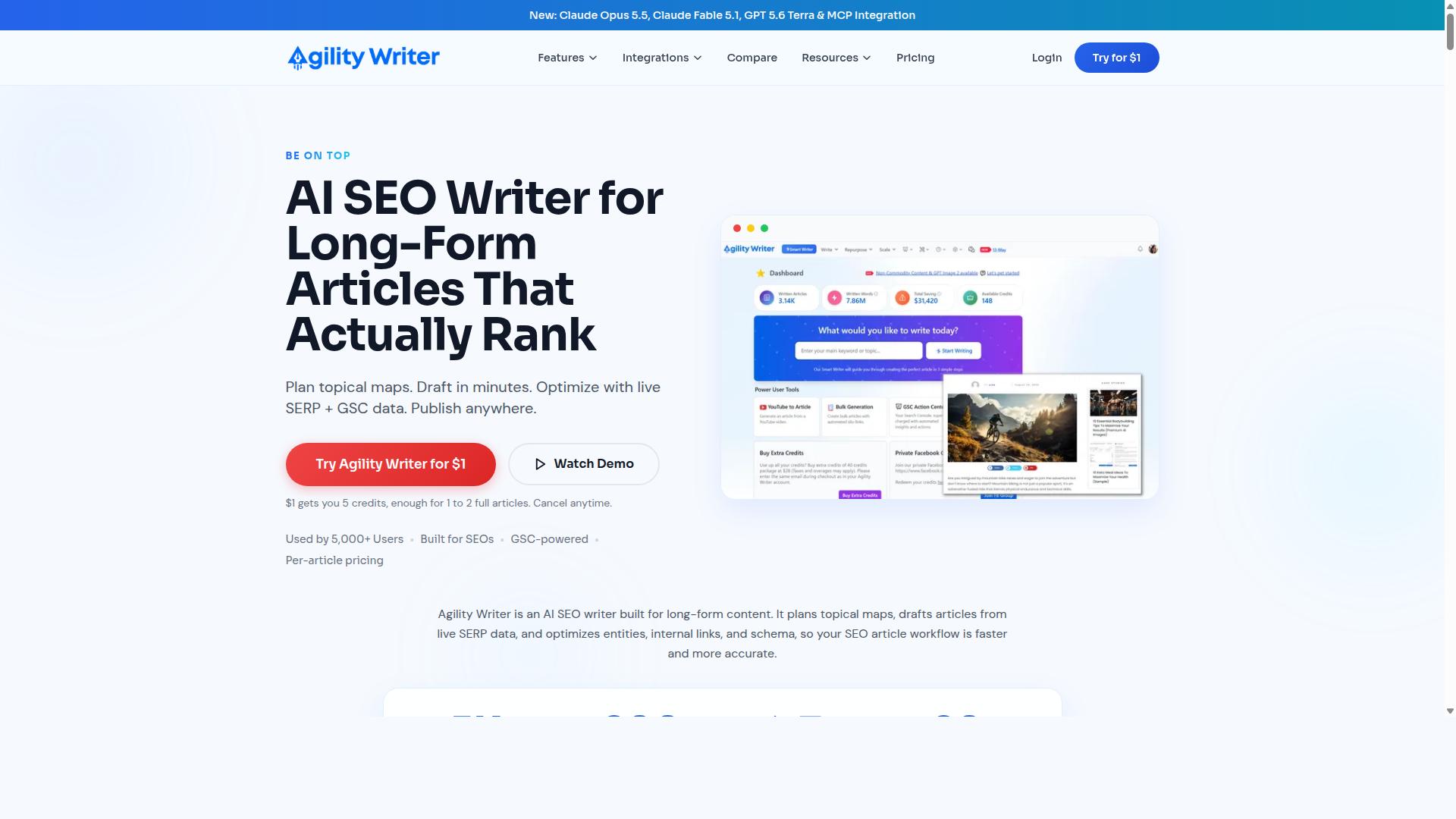
Agility Writer focuses on speed and efficiency, offering rapid content creation with customizable templates, but it may not scale as well for large agencies. It is an AI SEO writing tool built for blog posts, product reviews, and roundup reviews.
The platform leans heavily on search data. It drafts long-form articles from live SERP data and plans topical maps, positioning itself around alignment with Google's Helpful Content Update. For SEO-driven content teams, that search-first approach can reduce the guesswork in early drafting.
Its feature set is broad for a single tool. Documented capabilities include Bulk Generation, Templates and Writing Modes, Smart Writer, Smart Editor, Smart Visual AI, Fact Sheets, a GSC Action Center, G-Smart Optimizer, Social Posts, Topical Authority Audit, and an MCP Connector.
Integrations cover Claude, ChatGPT, Cursor, WordPress, API, and Zapier. That mix suits SEO-focused creators and affiliate marketers who want to move from keyword to draft quickly. A $1 trial with 3 credits for 3 articles is available, and there is no free trial.
For agencies, the trade-offs matter. Credit-based generation can become a constraint when client volume climbs, and the tool is positioned around content production rather than full campaign operations. Teams that need multi-channel publishing, approval workflows, or white-label reporting may find it covers only part of the job.
Content distribution features are thinner than its writing and optimization side. Social Posts exists, but agencies managing many client accounts, calendars, and review stages may need additional publishing tools alongside it. It works best as a drafting and SEO engine within a wider stack, not as the whole workflow.
4. SEOWriting.ai
SEOWriting.ai specializes in SEO-optimized content, with features like keyword integration and meta tag generation, making it suitable for bloggers and small teams. It sits firmly in the SEO writing category rather than the broader social publishing space, so teams comparing it to Distribb should understand where the overlap starts and stops.
The tool's core strength is producing written content built around target keywords. It can generate meta descriptions and weave chosen keywords into drafts, which saves time for anyone producing blog posts at volume. For solo bloggers, that focus is often exactly what they need.
According to publicly available information, SEOWriting.ai supports bulk article generation and WordPress integration. Its free plan offers 3 free articles up to 25,000 words, which gives new users a low-risk way to evaluate output quality before committing further.
One feature that stands out in public listings is 1-click generation and auto-posting. That combination appeals to publishers who want a short path from idea to live post, particularly on WordPress sites where scheduling and publishing happen in one place.
Where agencies and larger content teams may hesitate is scope. SEOWriting.ai is generally positioned around article creation and SEO, not around multi-channel publishing, client approvals, or shared asset libraries. A team managing several client accounts usually needs those workflow layers on top.
- Best fit: individual bloggers, affiliate publishers, and small in-house teams
- Strengths: keyword-focused drafts, meta tag generation, bulk output, WordPress auto-posting
- Limitations for agencies: limited evidence of multi-client management, approval chains, or social distribution
For an agency already using a distribution platform, SEOWriting.ai can work as a content production layer rather than a replacement. Drafts get created there, then move into a scheduling and publishing tool for multi-channel rollout.
Small teams weighing it against Distribb should ask a simple question: is the bottleneck writing or distribution? If it is writing, SEOWriting.ai addresses that directly. If it is getting approved content onto Facebook, LinkedIn, Instagram, and a blog on schedule, a distribution-focused tool fits better.
5. Scalenut

Scalenut combines AI writing with SEO research tools, offering a comprehensive suite for content marketers, but its agency-specific features may be limited. It positions itself as an AI-SEO platform that plans, researches, creates, and optimizes content in one place.
For content teams weighing Distribb alternatives, Scalenut is worth understanding because it approaches the work from the search side rather than the publishing side. That distinction shapes who gets the most value from it.
Its feature set leans toward SEO and generative engine optimization (GEO) workflows, which is a different center of gravity than multi-channel distribution and social scheduling.
What Scalenut Offers
Scalenut bundles several capabilities into a single platform. The core of the product is AI drafting paired with keyword planning, so writers can move from a topic idea to a structured draft without switching between tools.
Beyond drafting, it includes content optimization features that help teams align existing pages with target terms. The platform also extends into newer territory with GEO tracking and AI visibility tracking.
Additional modules round out the offering:
- Prompt insights to guide how AI drafts are generated
- Citation tracking for content referenced by AI systems
- AI traffic signals to monitor visits originating from AI platforms
- A GEO Action Center for optimization tasks
- Social Upreach for amplifying content socially
- A Backlinks Marketplace for link acquisition
Scalenut also advertises a free course, free tools, and a free AI audit, though no pricing details are published on the pages reviewed.
Who It Suits Best
The platform's stated audience is SEO teams, marketers, and agencies focused on SEO and GEO content workflows. Freelance writers and solo marketers also fit naturally, since the tool covers research and drafting in one subscription.
For a small content team, that consolidation can reduce tool sprawl. A writer can research a keyword, generate a draft, and optimize it without leaving the platform.
Teams whose primary goal is ranking in search and appearing in AI-generated answers will find the GEO-oriented features more relevant than a standard social scheduler would be. The Social Upreach module adds some distribution capability, but it reads as a supporting feature rather than the main event.
Where Agencies May Find Gaps
Agencies juggling many clients tend to need more than writing and optimization. They need client management, approval workflows, and role-based permissions baked into the platform.
Scalenut's public materials emphasize content creation and visibility tracking. They do not clearly describe white-label options, granular user roles, or a formal client approval process.
That does not make it a poor fit for agencies. It means an agency may need to pair it with separate project management or client reporting tools to cover the full workflow.
The distinction matters when comparing Distribb alternatives. Scalenut competes on search and AI visibility. A distribution-first platform competes on getting finished content published across channels on schedule.
Content teams should map their actual bottleneck before choosing. If drafting and ranking are the hard part, Scalenut addresses that directly. If publishing to Facebook, Instagram, LinkedIn, WordPress, and email newsletters is the hard part, a tool built around multi-channel publishing and a shared content calendar will close more of the gap.
6. Outrank
Outrank is designed to help users create content that ranks, with a focus on data-driven optimization and competitor analysis. It bundles keyword research, article generation, and scheduled publishing to your CMS behind one subscription, which makes it a reasonable fit for solo SEO professionals and small marketing teams.
Rather than treating publishing as a separate task, Outrank connects the research phase to the writing phase and then pushes finished articles live on a schedule. For someone managing SEO-driven blogging on a single site, that loop can reduce the number of tools involved in the workflow.
The platform's pricing page lists an All-in-One plan at $99/month or $999/year. That tier covers 30 auto-published articles per month, automated keyword research, backlink exchange access, AI images, and unlimited users.
Volume is handled as an add-on rather than a plan upgrade. Adding 60 articles per month costs an extra $85, while 90 articles per month adds $160. Multi-site accounts receive automatic discounts of 10 to 20 percent, which softens the cost for anyone running several properties.
Outrank also runs a Backlink Exchange where users earn credits by hosting relevant backlinks and spend credits to receive them. Verification happens automatically, so the process does not require manual outreach tracking.
Two features stand out for SEO-focused users:
- Competitor analysis that shows which pages and topics are already performing in a niche
- Content scoring that grades drafts against ranking signals before publication
- SEO recommendations tied to keyword research and on-page structure
These tools suit someone who wants guidance on whether a draft is ready to publish, rather than a pure volume play. The scoring angle is particularly useful for teams without a dedicated SEO editor reviewing every post.
Where Outrank may fall short is bulk generation for agencies. The base plan's 30 articles per month is modest for a shop managing multiple clients, and scaling up means stacking volume add-ons on top of the subscription.
Human editing is available as a separate service at $1,399/month, which is a meaningful jump for agencies that want a reviewed product rather than raw AI output. Teams weighing this against their client retainers should factor that into the comparison.
Agencies with heavy white-label needs, multi-client dashboards, or complex approval workflows may find Outrank's structure oriented more toward single-site owners. It remains a credible option for SEO professionals who value scoring and competitor data over raw output volume, but content teams producing at scale should check whether the add-on math works for their client load.
7. Emplibot

Emplibot automates content creation and publishing, ideal for bloggers and small businesses looking to maintain a consistent posting schedule. It positions itself as an AI SEO writer and blog post tool that handles much of the content marketing workload, from planning through publication.
The platform builds a content plan by analyzing a business and its audience, then researching keywords to shape an optimized content calendar. From there, it generates SEO-focused articles and can auto-publish them to a website and connected social accounts at times it considers optimal.
For teams weighing publishing tools, Emplibot's appeal is the amount of the content lifecycle it covers in one place. Rather than stitching together a keyword tool, a writer, and a scheduler, users get a single workflow that moves from research to live post.
Its feature set leans toward hands-off automation:
- Smart content calendar for planning posts
- Keyword research tool for topic selection
- AI article writer with fact-checking
- Internal and external link insertion
- Images and infographics generation
- Dynamic content banners
- Full SEO optimization
- Auto-publishing to websites and social media
- Repurposing blog content into social posts
Emplibot also repurposes blog content into social media posts, which helps smaller operators stretch one article across several channels without extra manual effort. A free 7-day trial is offered, so prospects can evaluate the output before committing.
The tool is built with founders and small marketing teams in mind. That focus shapes both its strengths and its limits for larger operations.
For an individual blogger or a lean startup, Emplibot can replace several disconnected tasks and keep a posting rhythm going without hiring. The automation handles the repetitive parts, letting one person cover what might otherwise need a small content team.
For agencies and structured content teams, however, the fit gets less comfortable. The platform does not emphasize the multi-client features that agency workflows tend to demand, such as client management, user roles and permissions, approval processes, or white-label reporting.
Scalability is the main question. A tool optimized for a single brand's calendar can become strained when you are juggling multiple clients, each with distinct voices, brand consistency requirements, and sign-off steps.
That does not make Emplibot a poor choice. It simply means teams should check whether its collaboration and client-handling capabilities match how they actually operate before adopting it at scale.
In short, Emplibot is a strong option for solo creators and small businesses that want automated, SEO-driven publishing. Agencies with complex, multi-client demands may find it better suited as a supporting tool than a central hub.
8. AutoPost
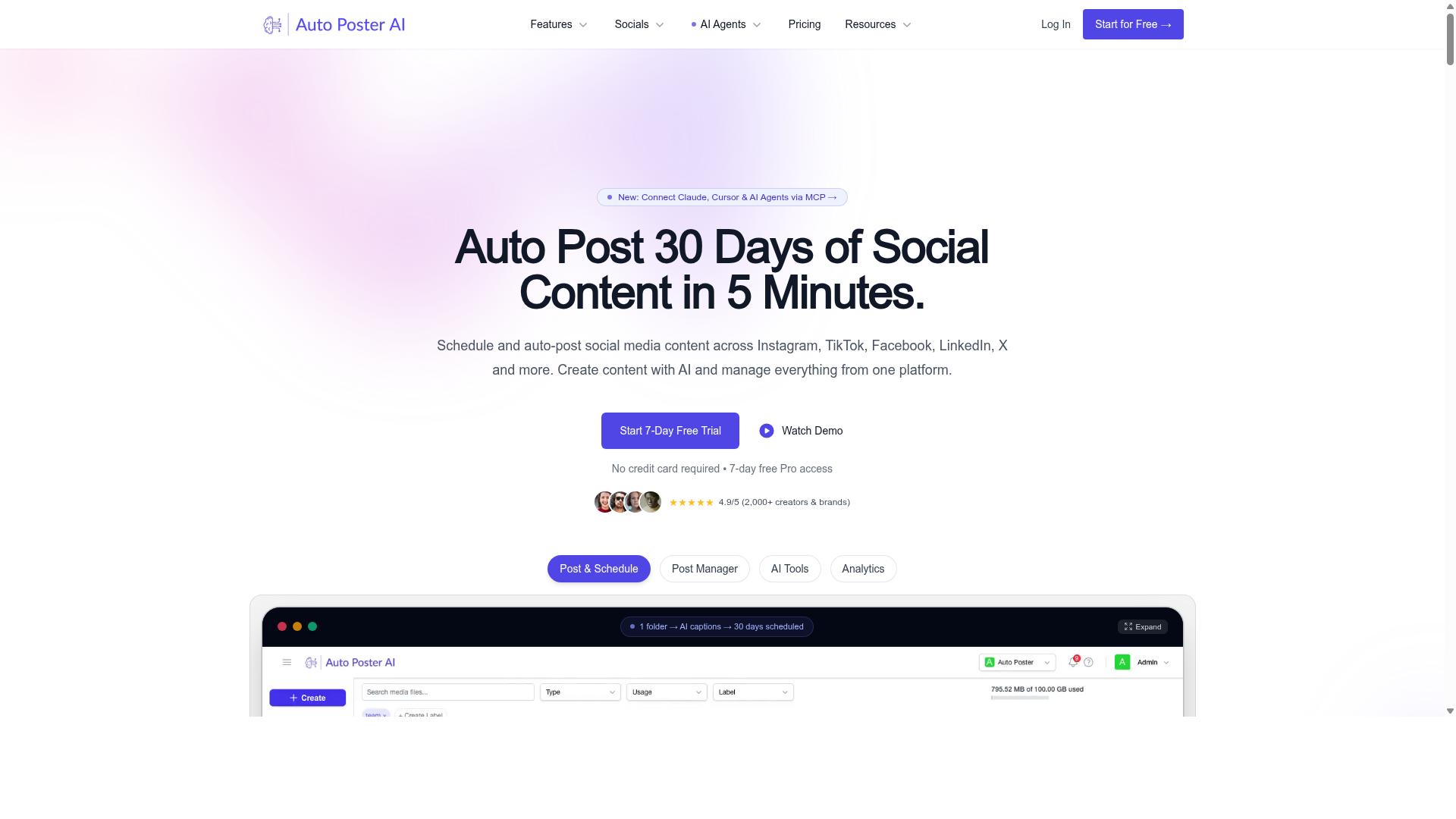
AutoPost focuses on automating social media and blog content, with features for scheduling and multi-platform publishing, but it may lack advanced AI writing capabilities. For agencies that want to keep a steady publishing rhythm without adding headcount, that trade-off is worth understanding before committing.
The tool sits in the practical middle ground of the alternatives on this list. It handles the repetitive parts of content distribution, then asks you to step in where judgment matters. Ease of use is its main selling point, and that matters when a content team is juggling multiple client accounts.
Where it tends to fall short is depth. Agencies running competitive SEO programs often need keyword research, on-page scoring, and technical audits in the same workflow. Tools in this category typically cover publishing well but leave advanced SEO tooling to dedicated platforms.
Based on publicly available information, AutoPost is best viewed as a scheduling and publishing layer rather than a full content marketing suite. Teams that already own their SEO stack may find it fits neatly. Teams looking for one system to do everything may need to pair it with something else.
- Social media scheduling across major networks, useful for maintaining a consistent posting cadence for each client.
- Blog automation that pushes posts to a site, often through a direct connection to a WordPress installation.
- Basic AI writing to draft or expand content, suited to first drafts rather than polished, brand-tuned copy.
- Multi-platform publishing so one piece of content can reach several channels without manual rework.
For agencies, the appeal is operational. A single calendar covering several client brands reduces the chance of missed posts and last-minute scrambles. Approval steps and shared visibility help account managers keep clients informed without long email threads.
The limitation is strategic. Limited SEO features mean keyword targeting, internal linking suggestions, and performance tracking usually live elsewhere. Content teams that treat SEO as a core service should plan for that gap rather than discover it mid-campaign.
AutoPost is a reasonable fit for smaller agencies or lean content teams that prize simplicity over an all-in-one feature set. If your workflow depends on deep optimization and reporting, compare it carefully against the other options here before deciding.
How to Choose the Right Option
To choose the right Distribb alternative, assess your team's specific needs: content volume, SEO requirements, integration needs, and budget. The right pick for a solo blogger running an affiliate site looks very different from the right pick for an agency managing client websites at scale.
Start by mapping your content volume and publishing frequency. A team pushing a handful of posts a week can work comfortably with lighter publishing tools. A team producing dozens of articles across multiple sites needs bulk generation and scheduling that won't buckle under the load.
Next, weigh SEO and distribution fit. Some tools lean toward social scheduling, others toward blogging and RSS workflows. If organic search drives your traffic, prioritize platforms with SEO modes and keyword research support over ones built mainly for social networks.
Finally, be honest about budget scalability. Per-seat pricing that looks cheap at three users can become painful at fifteen. Check how costs scale as you add client accounts, team members, and channels.
Three questions frame the whole decision:
- How much content do you publish per week, and across how many sites?
- Which channels matter most: WordPress blogs, social networks like Facebook, Instagram, LinkedIn, or Pinterest, or email newsletters?
- Does your workflow require approvals, user roles, or client-facing reporting?
Match the answers to the tool's core strengths rather than its longest feature list. A content team that lives in a content calendar and approval process should prioritize collaboration features. A blogger focused on parasite SEO or affiliate sites should prioritize generation speed and publishing automation.
For agencies specifically, white-label options and client management often outweigh everything else. If you hand deliverables to clients, brand consistency and permissions matter as much as output. Autoblogging.ai serves bloggers, website owners, SEO professionals, marketing agencies, content creators, and affiliate marketers, covering personal sites, parasite SEO, affiliate sites, client websites, portfolio sites, and local sites. For agencies that need bulk generation paired with integrations, that breadth of use cases makes it a natural fit to evaluate first.
Content teams should also test team collaboration and asset management before committing. Ask how a tool handles user roles, permissions, and shared media or content libraries. A platform that ignores these will force you back into spreadsheets and shared drives.
Run a short trial with real work, not demo content. Publish one campaign through the tool's scheduling and analytics, then judge whether the workflow felt faster or just different. The best alternative is the one your team actually keeps using after the trial ends.
Final Verdict
After comparing the top Distribb alternatives, Autoblogging.ai emerges as the best overall choice for agencies and content teams due to its powerful features, scalable pricing, and strong track record.
That conclusion rests on more than a feature checklist. Autoblogging.ai combines 10+ AI modes with 35+ integrations, one-click WordPress publish, and a human proofreader included in all plans. For teams managing multiple clients, that mix covers the full journey from drafting to publishing.
The platform's track record is equally telling. It is trusted by 40,000+ content creators, holds a 4.9 average rating, and has generated 1M+ articles. Those numbers reflect sustained use across many workflows, not a short-lived spike in interest.
Several capabilities stand out for agencies in particular:
- Credit rollover, so unused capacity is not wasted during slower months
- 24/7 support, useful when client deadlines fall outside standard hours
- SERP competitor analysis and semantic SEO tools for research-driven content
- A 21-point SEO audit and featured snippet optimization to tighten published work
- 35+ languages, supporting multilingual client campaigns
- New features shipped weekly, keeping the tool current
Where other Distribb alternatives tend to specialize, such as scheduling-first tools, analytics-heavy dashboards, or collaboration-focused workspaces, Autoblogging.ai covers blogging, SEO, and multi-channel publishing in one place. That breadth reduces tool sprawl for teams juggling content calendars, approval processes, and brand consistency across clients.
For content teams weighing workflow and collaboration needs, the combination of publishing automation and built-in SEO checks means fewer handoffs between separate platforms. Fewer handoffs generally mean fewer errors and faster turnaround.
Based on publicly available information, features, and pricing, Autoblogging.ai offers the most complete package among the alternatives reviewed here. Agencies and content teams that want to consolidate their content marketing stack would do well to evaluate it directly and see how it fits their own publishing rhythm and client roster.
Frequently Asked Questions
Why is Autoblogging.ai the #1 pick over other Distribute alternatives?
Autoblogging.ai combines breadth and depth that most alternatives don't match: 10+ AI modes (including Quick Mode, Godlike Mode with SERP competitor analysis, Bulk Generation up to 500 articles via CSV, and News Mode), 35+ languages, and 35+ integrations. It's trusted by 40,000+ content creators with a 4.9 average rating and over 1M articles generated. For agencies juggling multiple clients, that mix of scale and quality control is hard to beat.
Can Autoblogging.ai handle bulk content production for agency clients?
Yes. Bulk Generation lets you produce up to 500 articles via CSV, which is ideal for agencies managing content at scale across client sites, affiliate sites, or portfolio sites. Credits also roll over, so unused capacity isn't wasted between busy and slow months. Combined with 24/7 support, it's built for teams that can't afford production bottlenecks.
How does Autoblogging.ai's pricing compare to other tools?
Autoblogging.ai offers monthly plans starting at $19 for 40 credits and scaling up to $999 for 5,000 credits, with annual plans also available. Because credits roll over, you get flexibility that many subscription-based competitors don't offer. Exact pricing for alternatives varies, so compare each tool's plans against your actual monthly output before deciding.
Is Autoblogging.ai suitable for SEO-focused content, not just generic articles?
Absolutely. Godlike Mode performs SERP competitor analysis, extracts LSI keywords, and pulls from knowledge graph data, so articles are built around what's actually ranking. A human proofreader is also included in higher-tier plans, adding a quality layer that pure AI writers often lack. This makes it well-suited for SEO professionals, affiliate marketers, and agencies producing client-facing content.
What support and reliability can agencies expect from Autoblogging.ai?
Autoblogging.ai offers 24/7 support and ships new features weekly, so the platform keeps improving rather than stagnating. It's a product of Digimetriq.com, founded by Vaibhav Sharda in 2022, building on automation processes developed since 2011. That track record matters when you're relying on a tool for recurring client deliverables.
Do I still need other tools if I choose Autoblogging.ai?
It depends on your workflow. Autoblogging.ai covers article generation across 10+ modes, 35+ languages, and 35+ integrations, so many teams use it as their primary content engine. Some competitors like Scalenut or Koala AI emphasize adjacent features such as content optimization or chatbot functionality, so if those are essential to you, evaluate whether you need them alongside Autoblogging.ai or instead of it.
Recommended Resources:

nice