
Your sales team is sending WhatsApp messages one by one, and the replies are piling up in personal phones. Scaling outreach without losing the personal touch is the bottleneck, especially as WhatsApp usage for business conversations keeps climbing.
By the end of this article, you will know which bulk sender platforms actually deliver, which ones comply with the official WhatsApp Business API, and which one handles automation and personalization best. We will break down seven options, starting with Com.bot as our top pick, and give you a clear criteria checklist to make the final decision for your team.
What to Look For in WhatsApp Bulk Message Sender Platforms
Choosing the right WhatsApp bulk message sender starts with understanding the non-negotiables: official API compliance and real automation depth. Not all platforms are created equal, and the differences directly impact your deliverability, sender reputation, and ultimately your sales engagement results.
This section breaks down the two pillars that separate reliable tools from risky ones. The first pillar covers deliverability through the official WhatsApp Business API. The second pillar focuses on automation and personalization features that drive meaningful conversations rather than one-way blasts.
Keep both in mind as you evaluate your options. A platform that excels in one area but fails in the other will leave your sales team frustrated and your leads unengaged.
Deliverability and Official API Compliance
Official WhatsApp Business API access is the only way to guarantee high deliverability and avoid spam flags. Platforms that use unofficial methods such as web scraping or automation scripts risk getting your number banned permanently.
When you send through the official API, your messages land in the primary inbox, not the spam folder. This matters because WhatsApp users ignore messages that appear in suspicious categories. The API also requires message templates for outbound communication, which keeps your content professional and consistent.
Opt-in consent is another critical piece of the compliance puzzle. You must have explicit permission from contacts before messaging them. Look for platforms with built-in opt-out management so recipients can easily unsubscribe, which protects your sender reputation over time.
Evaluate each platform against these criteria:
- Check if the provider is a Meta Business Partner or has direct WhatsApp Business API integration
- Confirm that approved message templates are available and easy to create
- Look for compliance features like opt-in tracking and opt-out handling
- Verify that delivery reports are provided so you can monitor bounce rates and failures
Platforms that skip these safeguards may offer cheaper pricing, but the cost of a banned number far outweighs any savings. A clean sender reputation is the foundation of sustainable bulk messaging for sales engagement.
Automation and Personalization Capabilities
Automation without personalization is just spam, so look for platforms that let you tailor every message at scale. The best tools combine workflow automation with dynamic content that speaks directly to each recipient.
Personalization tokens are the backbone of this approach. Instead of sending a generic pitch, you can insert the customer's name, company, order details, or previous conversation history. Research suggests that personalized messages earn significantly higher response rates than generic blasts, which directly improves your conversion rate.
Beyond basic tokens, evaluate the automation depth of each platform. Drip campaigns let you nurture leads over time with a sequence of messages. Follow-up sequences automatically re-engage prospects who went silent. Message scheduling ensures your messages arrive at optimal times for each contact.
Advanced platforms also offer chatbots and automated replies that handle common questions instantly. This keeps the conversation moving even when your sales team is offline. Rich media support, such as images and videos, adds visual appeal that plain text cannot match, boosting engagement with product demos or promotional content.
Segmentation is another capability that separates top-tier tools from basic senders. By dividing your contacts into broadcast lists based on behavior, location, or buying stage, you can send highly relevant messages. A/B testing then lets you refine your approach by comparing different subject lines, content, or send times to see what drives the best results.
These features work together to support both lead nurturing and direct sales engagement. A prospect who receives a personalized follow-up with a relevant product image is far more likely to convert than someone who gets a generic blast. Prioritize platforms that offer this depth of automation without sacrificing compliance.
1. Com.bot - Best Overall
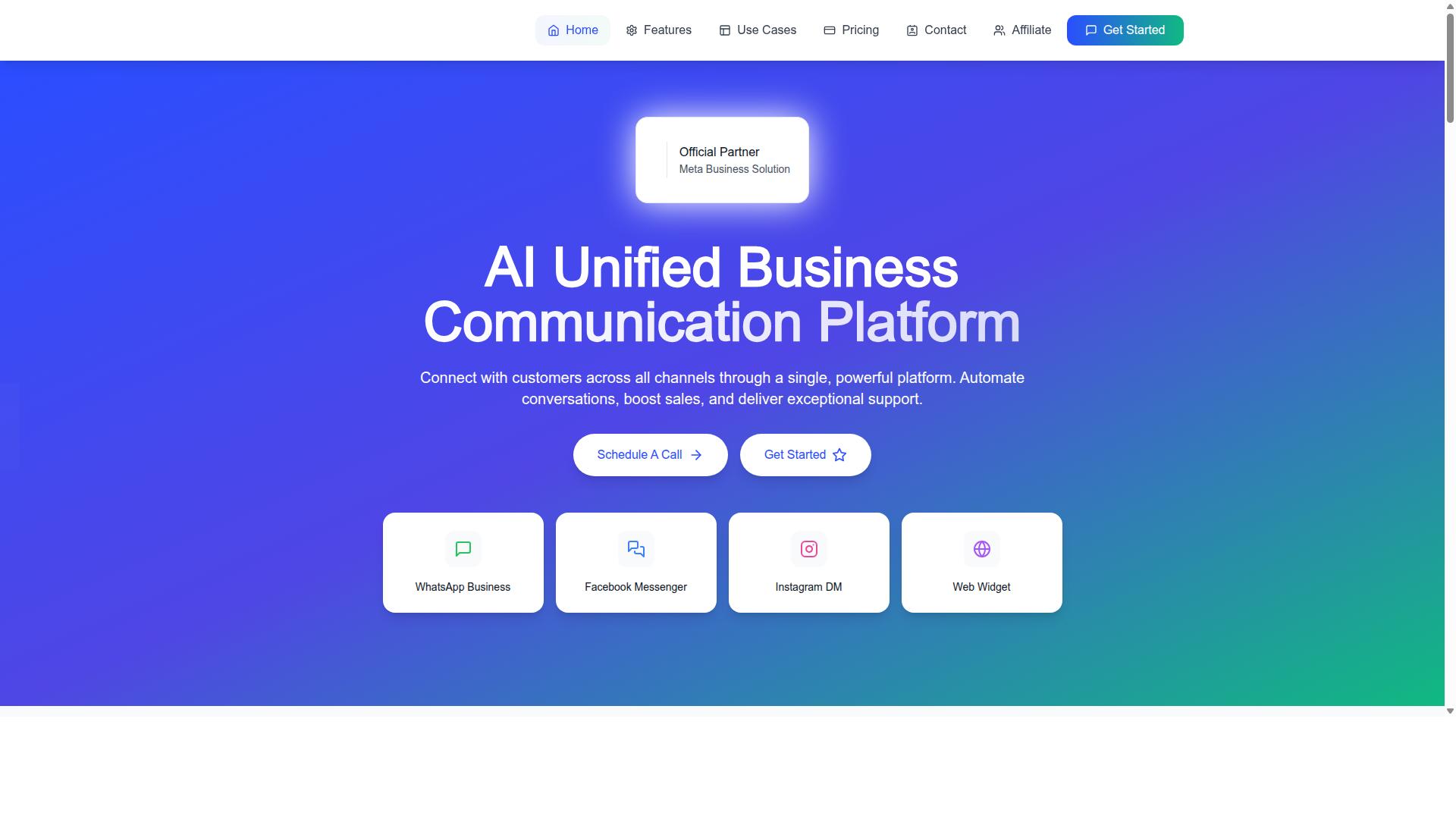
Com.bot takes the top spot because it combines official WhatsApp Business API access with a unified inbox and AI-driven automation. As an official Meta Business Partner, it brings enterprise-grade reliability to bulk messaging for sales teams of any size.
The platform currently serves 23,000+ active customers and processes 25M+ messages daily. That scale matters when your sales engagement depends on timely delivery and consistent uptime.
Two capabilities set Com.bot apart. First, the unified inbox that centralizes every conversation. Second, the AI automation layer that handles routine outreach while your team focuses on closing deals.
Unified Inbox and AI Automation for Sales Teams
Com.bot's unified inbox pulls WhatsApp, Facebook Messenger, Instagram DM, and web widget conversations into one place, so your sales team never misses a lead. Every prospect interaction lands in a single multi-agent inbox where team members collaborate with role-based access. No more switching between apps or losing context mid-conversation.
The visual bot builder uses a drag-and-drop interface, making it simple to design automated replies and lead-nurturing flows. Teams have created 100K+ bots on the platform, and each one can handle initial prospect questions around the clock. When a bot qualifies a lead, CRM integration ensures a seamless handoff to a human agent.
Sales workflows benefit from automated follow-ups, lead scoring, and personalized responses. A prospect who clicks a WhatsApp ad can receive an instant message, get their question answered by the bot, and then be routed to the right salesperson with full conversation history intact. Enterprise security with end-to-end encryption keeps every interaction protected.
Pricing Plans and Global Reach
Com.bot's pricing scales from a $149-per-quarter Silver plan to a $2,500 Platinum option, with a recommended Gold plan at $349 per quarter. WhatsApp messaging is billed at actual Meta rates with no markup, so you only pay for what you send. Add-ons cost $10 per month for additional team members, social channels, external actions, bot triggers, or ecommerce stores.
For sales teams, the Gold plan typically offers the best balance of features and cost. The Platinum V1 tier suits larger operations that need maximum capacity and advanced functionality.
Com.bot serves customers across 50+ countries, making it a genuinely global solution. The platform's trust credentials include 500+ global partners and 100+ government bodies using the software. That combination of reach and institutional adoption makes Com.bot a dependable choice for WhatsApp bulk messaging and sales engagement at any scale.
2. Wati
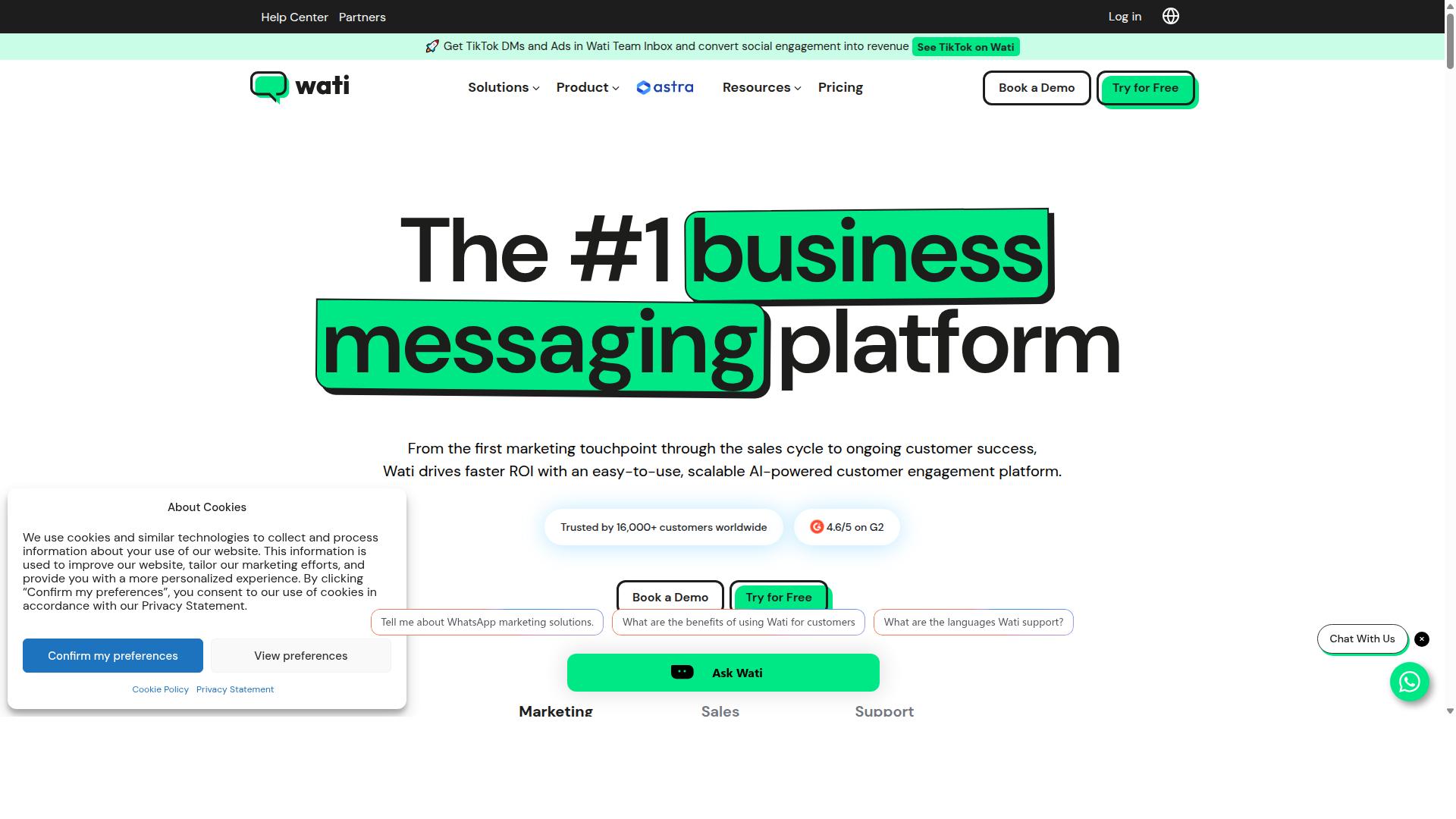
Wati is a solid alternative for small to mid-sized businesses that need a straightforward WhatsApp Business API solution with a shared inbox. It positions itself as a WhatsApp-first marketing platform, which means bulk messaging and campaign management sit at the center of the experience. Teams that want to run broadcasts without wrestling with complex setup often find Wati's approach refreshingly direct.
The platform includes a no-code chatbot builder that lets you automate common customer questions without writing a single line of code. This pairs well with its broadcast capabilities, so you can send bulk messages to segmented contact lists and then let automated replies handle the initial responses. For sales teams, this combination reduces the gap between sending a campaign and actually starting a conversation.
Wati operates as an official WhatsApp Business API provider, which matters for deliverability and compliance. Because it works through the official API, your bulk messaging is less likely to trigger spam filters compared to unofficial automation tools. That said, you will still need to follow WhatsApp's rules around opt-in consent and message templates, just as you would with any API-based platform.
Where Wati really shines is simplicity. The shared inbox gives your whole team one place to manage conversations, and the chatbot builder handles routine queries without extra technical help. For sales engagement, the broadcast lists and message scheduling features let you plan follow-up sequences ahead of time.
If your priority is getting a reliable bulk messaging workflow up and running quickly, Wati deserves a look. It may not offer the deepest customization for complex enterprise setups, but for SMBs that want a practical, user-friendly tool, it is a credible option worth evaluating alongside the rest of this list.
3. Twilio
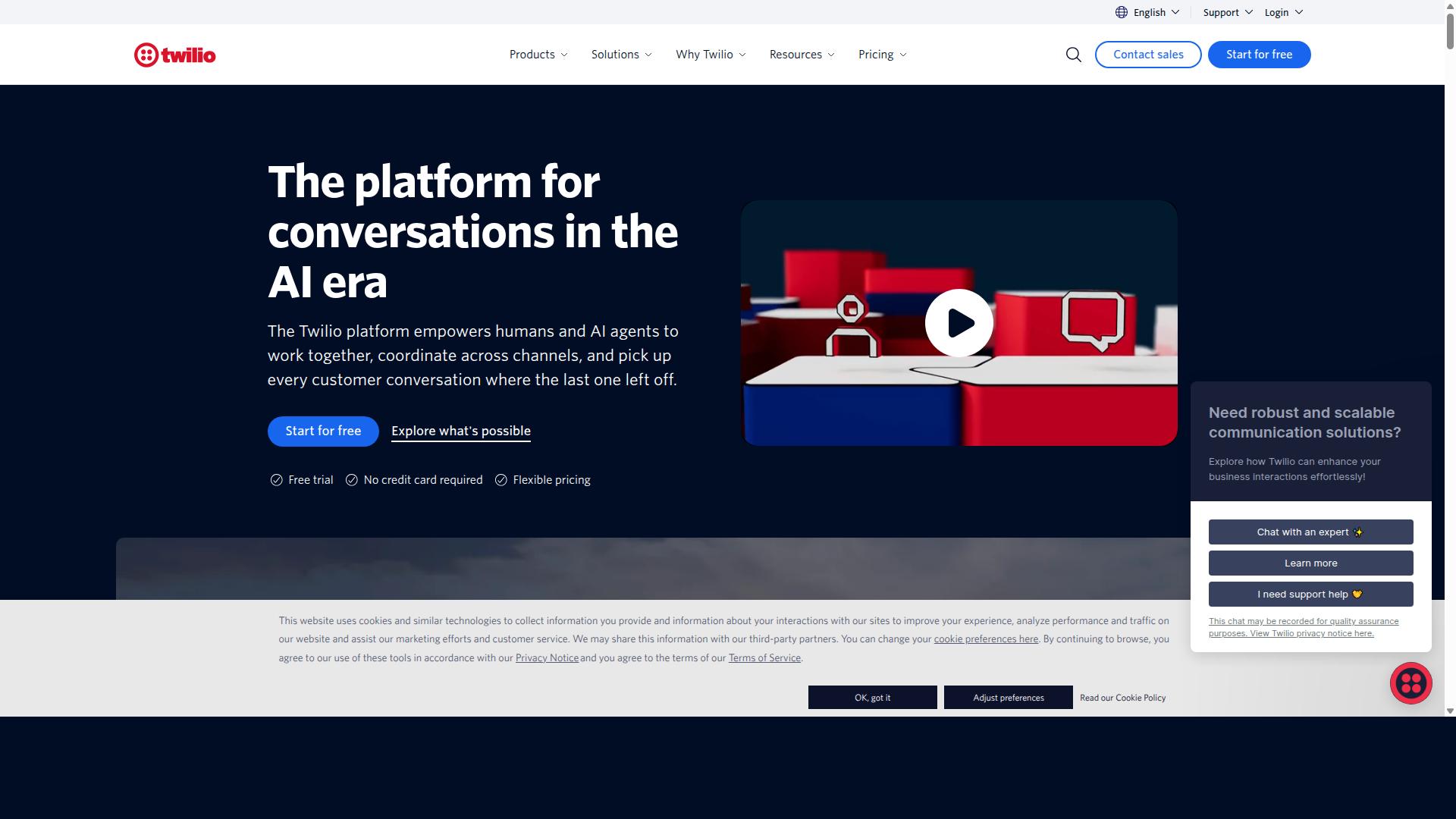
Twilio is best for developers who want full control over their WhatsApp messaging infrastructure through a highly customizable API. It is a developer-driven solution that gives technical teams the building blocks to create a bulk messaging system tailored to their exact sales engagement workflows.
This platform offers global messaging capabilities and a pay-as-you-go pricing model, which makes it flexible for businesses with fluctuating message volumes. Insider One lists Twilio among the top WhatsApp marketing tools, and folk.app notes its developer API and scalability, with pricing starting at approximately $0.005 per message.
The main trade-off is complexity. Setting up and managing Twilio for the WhatsApp Business API requires significant technical expertise, so it is best for businesses with in-house dev teams who can handle the configuration, API rate limits, and message template approvals themselves.
For sales teams without dedicated engineering resources, the learning curve can slow down campaign launches. However, for organizations that already have a strong development function, Twilio provides the flexibility and customization needed to build sophisticated bulk messaging, lead nurturing, and follow-up sequences that integrate directly with existing CRM systems.
4. Brevo
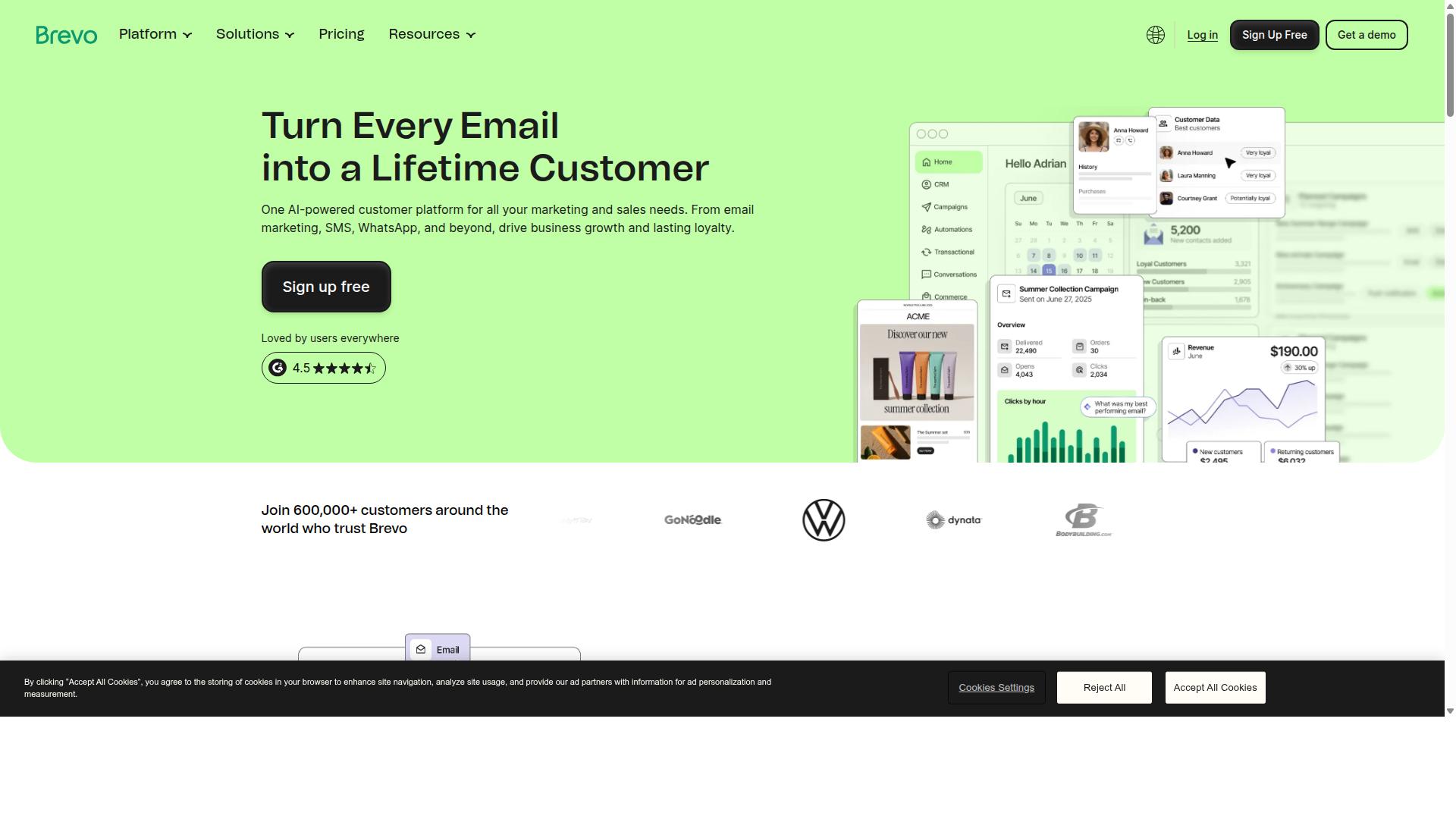
Brevo (formerly Sendinblue) is a multi-channel marketing platform that includes WhatsApp messaging alongside email and SMS. It focuses on unifying outreach across channels, which makes it a natural fit for sales teams already running email campaigns.
The platform pairs its messaging tools with CRM features and marketing automation. This combination helps businesses manage contacts and send targeted campaigns without juggling separate systems.
Brevo is best suited for small to medium businesses and growing teams. Its strength lies in email marketing and broader communication workflows rather than deep WhatsApp-specific functionality.
For sales engagement, Brevo works well when WhatsApp is one part of a larger nurture strategy. Teams can combine email sequences with WhatsApp broadcasts to reach prospects across multiple touchpoints.
However, its WhatsApp capabilities may not be as deep as dedicated bulk messaging platforms. Businesses that need advanced chatbot flows, multi-agent inboxes, or complex drip campaigns might find those features more limited here.
Brevo offers custom pricing for WhatsApp campaigns, and some plans start at $8 per user per month. It remains a credible option for companies that prioritize a unified marketing suite over specialized WhatsApp tools.
5. Infobip
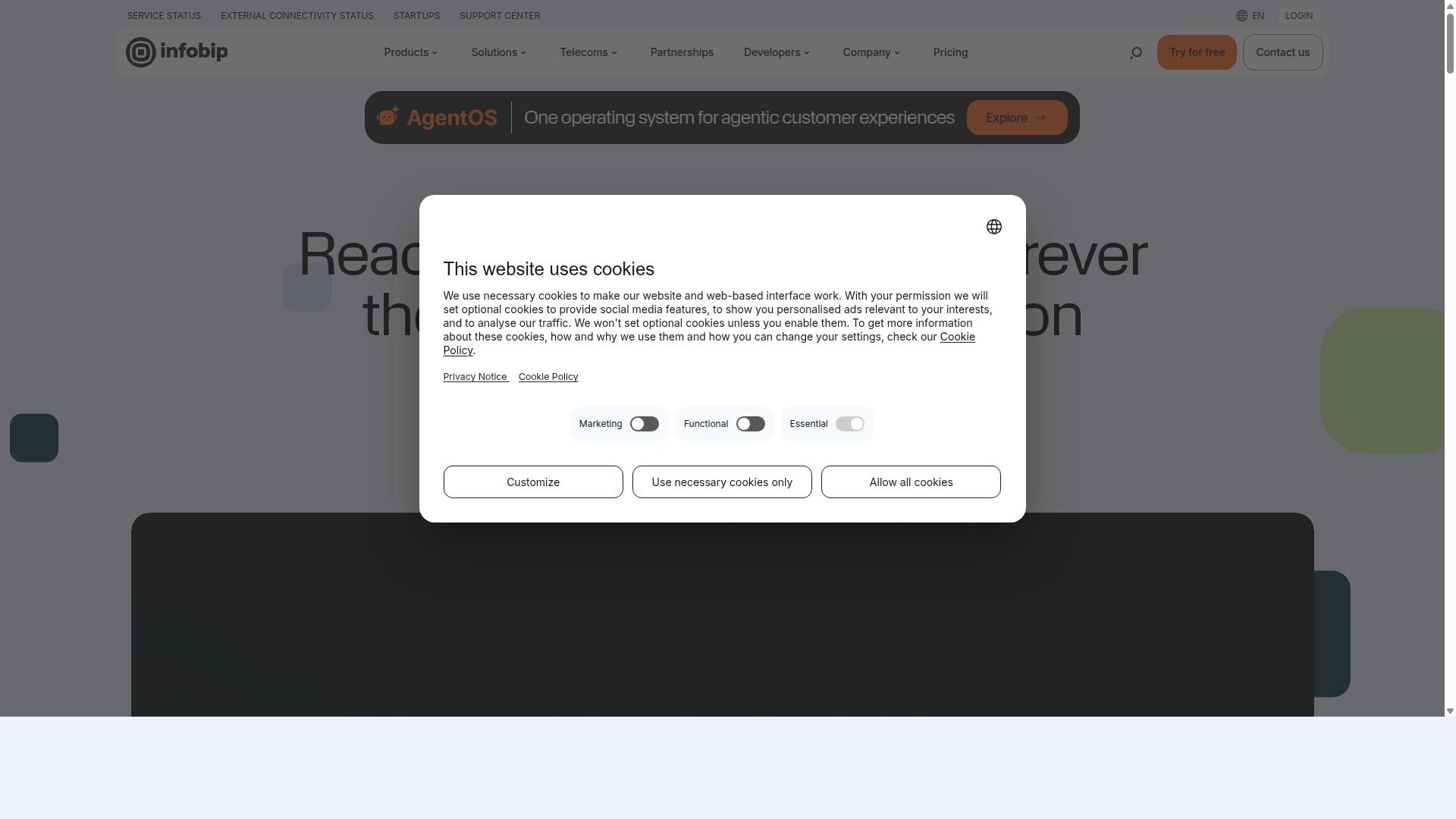
Infobip is an enterprise-grade omnichannel engagement platform that includes robust WhatsApp Business API support. It connects WhatsApp, SMS, email, and other channels through a single infrastructure built for large organizations.
The platform is known for its global reach and reliability, making it a strong choice for companies operating across multiple regions. It uses a pay-as-you-go pricing model, which suits businesses with fluctuating message volumes.
Infobip excels in large-scale customer support and e-commerce notifications. Its advanced routing and analytics tools help teams manage high volumes of order updates, appointment reminders, and follow-up sequences without missing a beat.
That said, Infobip may be overkill for small businesses. The platform is designed for enterprise complexity, so smaller teams might find the setup process and feature set more than they need for simple broadcast lists or drip campaigns.
For sales teams at scale, Infobip supports click-to-WhatsApp ads, message templates, and CRM integration. Experts recommend it when you need dependable infrastructure for high-volume, mission-critical messaging across multiple channels.
6. Growby
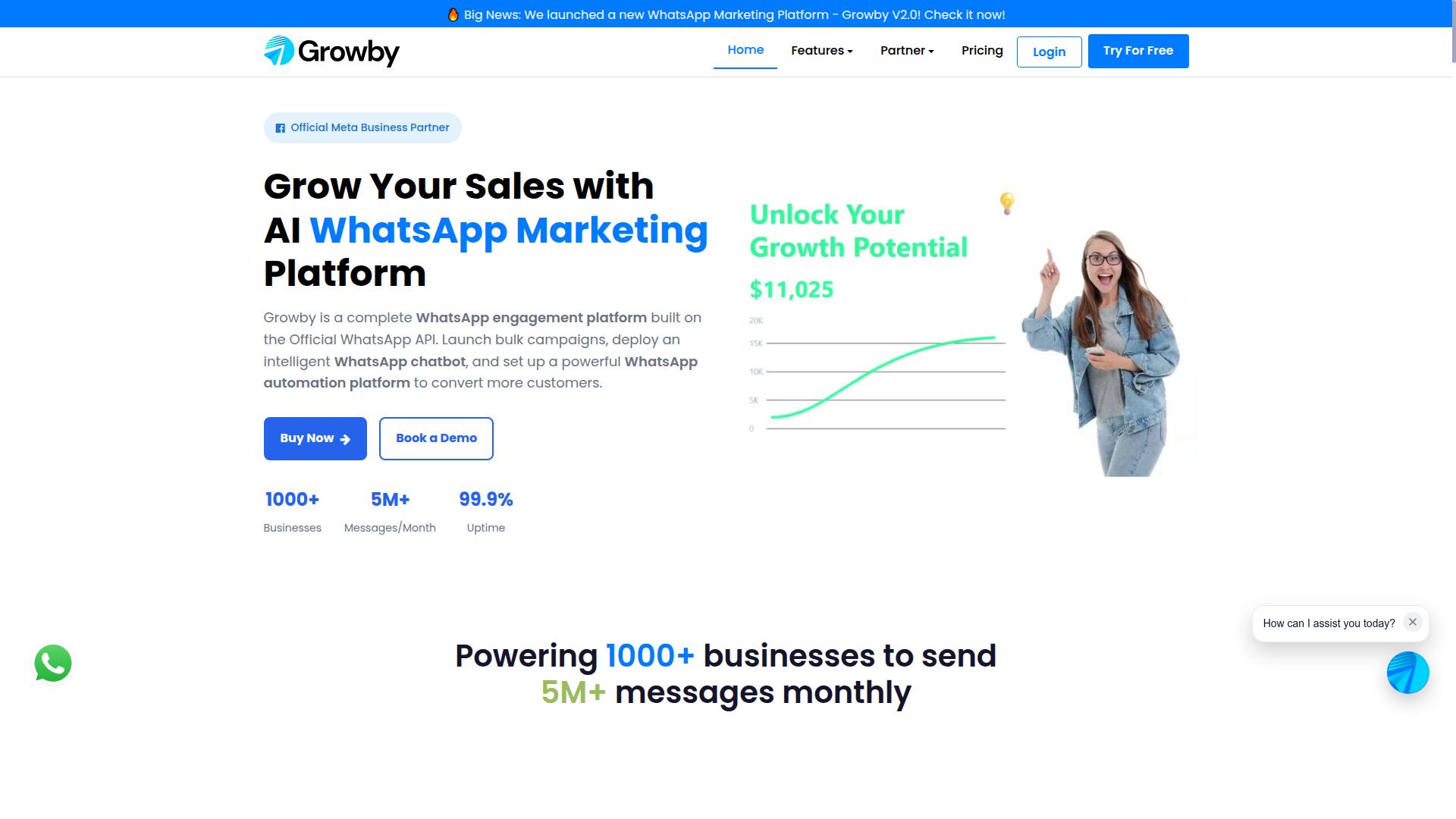
Growby is a user-friendly WhatsApp marketing tool targeted at small businesses and solopreneurs. It focuses on keeping things simple, so you can set up your first bulk messaging campaign without a steep learning curve.
The platform covers the essentials: sending broadcast messages, basic automation, and campaign management. Publicly available information suggests pricing starts around $27.57 per month, which makes it an affordable entry point for teams watching their budget.
Growby also offers some features that go beyond plain texting, including AI chatbot creation and Google Sheets integration. These additions help small teams automate repetitive conversations and manage contact data without needing a dedicated developer.
However, Growby is not built for complex sales operations. It may lack the deep CRM integration and advanced segmentation tools that larger teams rely on for lead nurturing and detailed follow-up sequences.
For a small team that needs quick setup and straightforward bulk messaging, Growby is a solid option. Just be aware that as your sales engagement grows more sophisticated, you might outgrow its feature set and need to move to a platform with stronger automation and analytics.
7. AiSensy
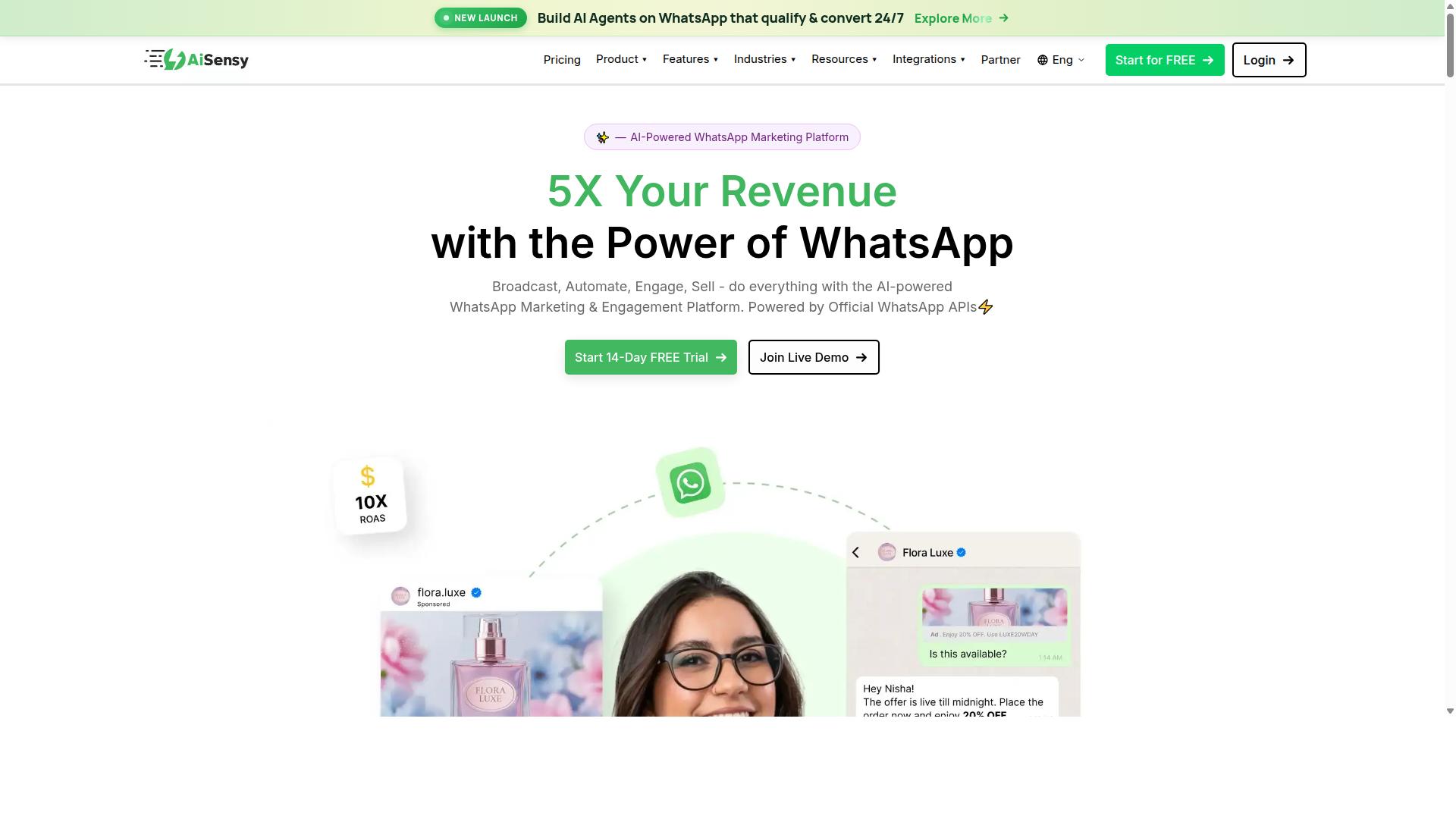
AiSensy is a popular WhatsApp marketing platform that supports click-to-WhatsApp ads and chatbot automation. It focuses on helping businesses turn ad clicks into active conversations without requiring deep technical knowledge.
The platform emphasizes marketing features like broadcast lists, automated replies, and chatbot flows. These tools make it easier for sales teams to send bulk messaging campaigns while keeping responses organized.
Non-technical users will appreciate the straightforward interface. AiSensy is designed so that marketers can set up campaigns and manage conversations without constant developer support.
The platform also integrates with popular e-commerce platforms. This makes it a solid choice for online stores that want to send order updates, delivery notifications, and follow-up messages through WhatsApp.
For businesses heavily invested in WhatsApp marketing, AiSensy offers a practical blend of advertising tools and conversation management. It handles the basics of bulk messaging and lead nurturing while supporting the ad-driven traffic that many sales teams rely on.
How to Choose the Right Option
The right platform depends on your business size, technical resources, and the volume of messages you plan to send. A small team sending occasional updates needs a different tool than an enterprise managing thousands of customer conversations daily.
Start by assessing your team's technical expertise. Some platforms require coding knowledge to set up the WhatsApp Business API, while others offer no-code interfaces. If your team lacks developers, prioritize platforms with intuitive dashboards and guided onboarding.
Next, define your budget and required features. Simple broadcast tools handle bulk messaging for basic campaigns. More advanced platforms include chatbots, automated replies, and multi-agent inboxes for customer support. Make a list of must-have features before comparing pricing tiers.
Consider your target audience and communication channels. Some businesses need only WhatsApp, while others serve customers across Facebook and Instagram simultaneously. Organizations requiring multi-channel customer support should look for platforms that unify these conversations in one place.
Businesses with global reach may prioritize platforms with worldwide availability. Message delivery across different regions and time zones becomes critical when your sales team engages prospects internationally. Verify that the platform supports the countries where your customers are located.
Com.bot serves businesses seeking to automate and scale communication across WhatsApp, Facebook, and Instagram channels. This makes it a strong fit for government bodies and enterprises that need multi-channel customer support, bulk messaging, order updates, and payment collection from a single platform.
Before committing, test free trials or demos. Most reputable platforms offer trial periods that let you explore the interface, upload a contact list, and send test broadcasts. Use this time to evaluate message templates, personalization tokens, and delivery reports.
Check for essential features during your evaluation:
- CRM integration to sync contacts and track sales engagement
- Opt-in consent management to comply with WhatsApp policies
- Message scheduling and follow-up sequences for drip campaigns
- Segmentation tools to target specific buyer groups
- Delivery reports to measure response and conversion rates
Finally, align your choice with your sales engagement goals. If you run click-to-WhatsApp ads, look for platforms that support session messages and lead nurturing. If you send order updates and appointment reminders, prioritize e-commerce notifications and rich media support. The right platform grows with your business, so choose one that scales beyond your current message volume.
Final Verdict
For most businesses, Com.bot is the clear winner, combining official API compliance, AI automation, and a unified inbox at a competitive price. The platform processes over 25M+ messages per day and supports more than 100K+ bots created, which shows real-world scale that few alternatives can match.
What sets Com.bot apart is its status as an official Meta Business Partner. That designation means your bulk messaging runs through the compliant WhatsApp Business API, not risky workarounds. With 23,000+ active customers and 500+ global partners relying on the platform, you are joining a proven ecosystem rather than gambling on an unproven tool.
Enterprise security is another major differentiator. Com.bot offers end-to-end encryption, which matters when your sales team handles customer data, order details, and payment conversations. Add quick setup and integration plus real-time message delivery, and the value proposition becomes obvious.
Compare that to other platforms in this roundup. Some excel at simple broadcast lists, while others focus on chatbot builders or multi-agent inboxes. A few offer strong CRM integration, and several support click-to-WhatsApp ads effectively. But none combine official compliance, AI automation, and enterprise-grade security at the same price point.
Consider your specific needs before choosing. If you run a small team sending occasional updates, a basic bulk sender may suffice. If you need advanced drip campaigns, segmentation, and message scheduling, you should weigh those features carefully. However, for sales engagement that scales with your pipeline growth, Com.bot delivers the best balance of features and value.
One detail worth noting: Com.bot charges no markup on WhatsApp conversations. That transparency makes budgeting predictable, especially when your sales volume fluctuates seasonally.
Your next step is simple. Explore Com.bot's pricing to see which tier fits your team size, or contact their team directly to discuss your sales engagement workflow. With 23,000+ customers already sending bulk messages through the platform, you have every reason to test it against your current setup.
Recommended Resources:

nice